Eating in the Philippines: The Survival Guide (Gastronomy, Water and Turista)
Can I drink tap water? What are Adobo or Balut? Navigate the local gastronomy without getting sick with our advice on hygiene and must-try dishes.
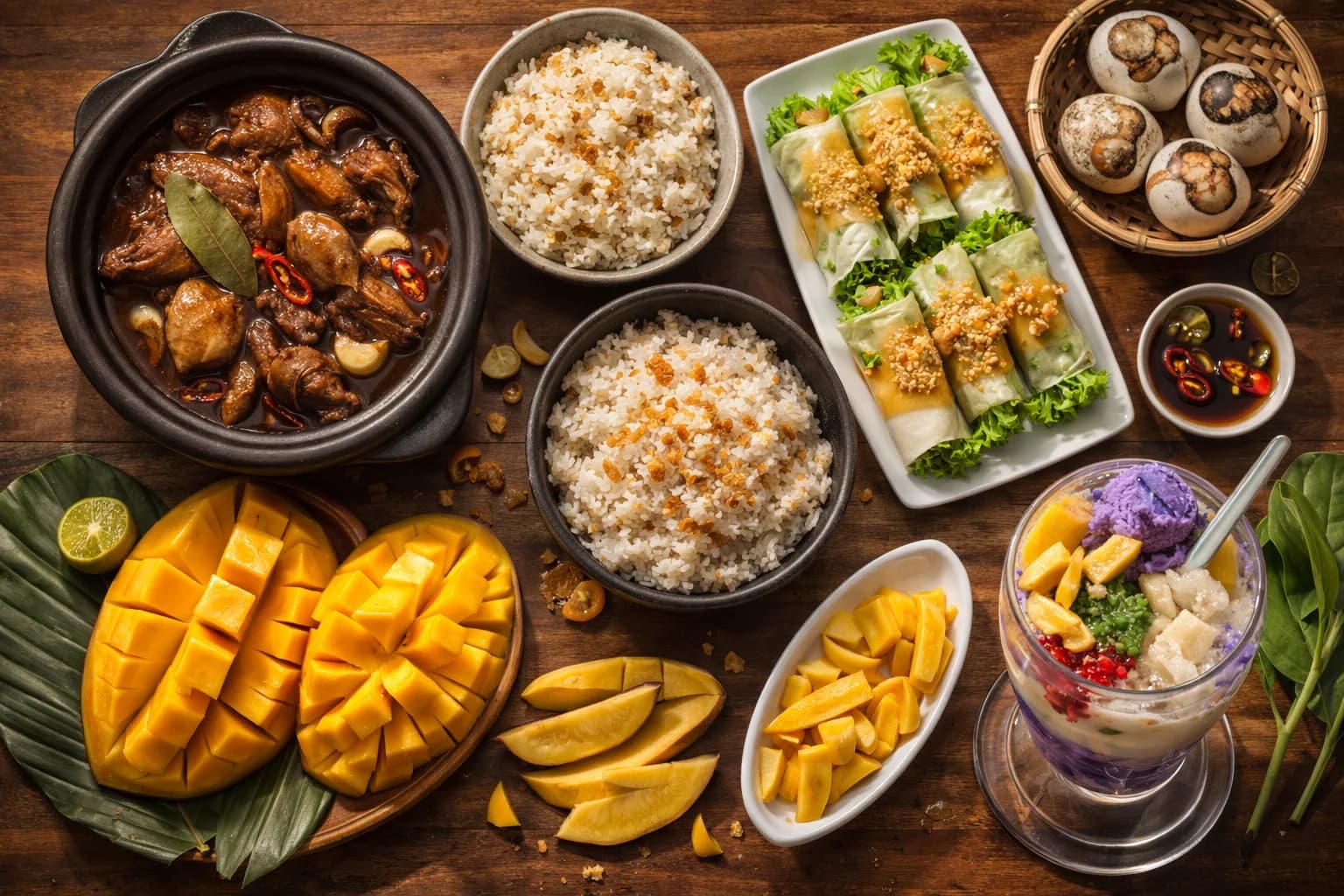
The Gastronomic Landing: Surviving and Enjoying the Philippines
"Never drink the tap water and watch out for ice cubes!" This alarm cry is the classic recommendation from all travelers. But is there really cause for panic? And above all, what do you actually eat when you leave the expat restaurants?
Philippine cuisine is not (yet) as globally famous as Thai or Vietnamese food. Less spicy, more salty and vinegary (due to Hispanic heritage), it is a surprising fusion of East and West (Malay, Spanish, and American influences).
Here is our complete (and transparent) guide to feasting in the land of smiles without losing your intestinal flora.
---
1. Drinking Water and the Myth of the Killer Ice Cube
This is THE number 1 topic for cautious travelers.
* Can you drink the tap water?
No. Strictly NEVER. In the Philippines, running water is not drinkable for the locals either. Even in luxury hotels (Unless expressly mentioned "Potable UV filtered"). Don't even brush your teeth with tap water from the sink if your stomach is very, very fragile in the first few days.
* How do you drink then?
Always demand "Bottled Water" or look for "Purified/Distilled Water" dispensers. Filipinos all buy huge blue jugs of filtered water delivered weekly (`Nature's Spring`, `Wilkins`, `Absolute`).
* Are Ice Cubes toxic?
This is a myth that dies hard. For over 10 years, the government has tightened the rules. In all bars, beach cafes (even the shabby ones), and fast-food joints in the country (Jollibee, McDonald's), ice is industrial. It is delivered by the bag, manufactured in certified factories (with characteristic hollow tubes). You can ask for ice ("With Ice please") in complete safety 99% of the time.
The only place you avoid ice cubes is the little lemonade stand on the corner of an isolated street.
---
2. Street Food (The "Carenderia" and Skewers)
Filipinos love to eat out. The streets are full of "Carenderias" (pots lined up presenting pre-cooked dishes) or night barbecues (Turo-Turo).
The Golden Rule of Street Food: If it's fried, grilled "before your eyes," or taken out of a boiling pot / heated with a flame... it's safe*.
* What is dangerous? Anything that has sat out in the open air (Tapas or raw vegetables) uncovered in 85% ambient humidity and 32°C (90°F) heat for hours. (Bacteria proliferate!). Therefore, skip the mixed salad / raw veggies on the stalls and eat your food hot!
Daring Specialty: "Balut" (The Unfinished Duck Egg)
If you hear someone yelling "Baaaaalût" in the street at night on a bicycle, this is the typical late-night Philippine snack after a boozy evening. It is a duck egg incubated for 18 days and boiled (with the embryo still visible). Salted with vinegar (Sukang), it's delicious to some, terrifying to many.
---
3. The Must-Trys of "Pinoy" Cuisine
Forget your diet. Everything here comes with one or two mountains of "Rice" (White rice). Without rice, a meal doesn't exist in the Uni... Sorry.. In the Philippines.
1. Pork (or Chicken) Adobo: THE national dish. The meat is slowly simmered in soy sauce, cane vinegar, intense garlic, peppercorns, and bay leaves. A melt-in-the-mouth delight.
2. Sisig: Served on a blazing, sizzling cast-iron skillet, it traditionally consists of finely chopped pork head/cheeks and liver, seasoned with chili, calamansi (local lime), onion, and a raw egg cracked on top. Perfect with a Red Horse beer!
3. Lechon: The star of birthday parties or weddings. A whole suckling pig slowly roasted on a spit over charcoal. Its skin is golden and crispy like glass. In Cebu, it's considered the best in the world according to Anthony Bourdain!
4. Kinilaw: The local "Ceviche". Extra-fresh raw fish marinated in vinegar or coconut milk (Gata), onions, ginger, and chili. Typical on the beaches.
---
For the slightest persistent gastric pain, a fresh young coconut ("Buko") or a pharmacy (Mercury Drug) to buy Imodium will save 50% of your days (sold individually without a prescription!).
👉 Save time on logistics to fully enjoy the culture via our agency!
🥢 Eating in the Street (Street Food): Risks and Precautions
Philippine street food is a vital part of the local culture (obviously thinking of the famous Balut, grilled pork skewers, and kwek-kwek).
Our advice to avoid Turista (traveler's diarrhea):
❓ FAQ: Food and Water in the Philippines
Where can I drink water safely?
Never drink tap water, even in nice hotels. Always consume sealed bottled water or purified gallons via the "Water Refilling Stations" omnipresent in the country (which filter water by reverse osmosis).
Is water for brushing teeth safe?
In Manila, Cebu City, or in large resorts, you can use tap water to brush your teeth. In more remote areas (El Nido, Siargao, or the small islands), tap water often smells of sulfur and comes from dubious or reclaimed piping. Use a cup of mineral water for this purpose instead.
Are ice cubes safe?
Nowadays, the vast majority of restaurants and fast-food chains (Jollibee, etc.) buy their ice cubes (often tubular, hollow inside) from licensed ice factories that use purified and filtered water. You can generally consume them without fear.
Plan and book
Useful services to complete your Philippines trip
Always compare the final price and conditions before booking. These are the steps that most often delay a departure.
Compare flights
Search routes and fares to Manila, Cebu or Clark.
Search flights →Book accommodation
Choose a flexible option and keep proof of your arrival address.
View accommodation →Book activities
Compare tours, visits and experiences in Manila, Cebu and Palawan.
Browse activities →Arrange a transfer
Pre-book a ride between the airport and your accommodation.
Compare transfers →Compare a complete trip
An alternative for comparing flights, hotels and transport in one place.
Open Trip.com →Check travel insurance
Review medical coverage and exclusions before departure.
Get a quote →Install an eSIM
Prepare your mobile connection before landing in the Philippines.
View data plans →Prepare your payments
Compare exchange rates and fees before payments or transfers.
Explore Wise →Prepare onward proof
Verifiable reservation solution when your return itinerary is not fixed.
View solution →