Health, Vaccines and Mosquitoes in the Philippines (2026): Practical Guide
Do you really need to take anti-malaria treatment? Which vaccines are mandatory in 2026? Our advice on dengue fever, tap water, and the ideal first aid kit.
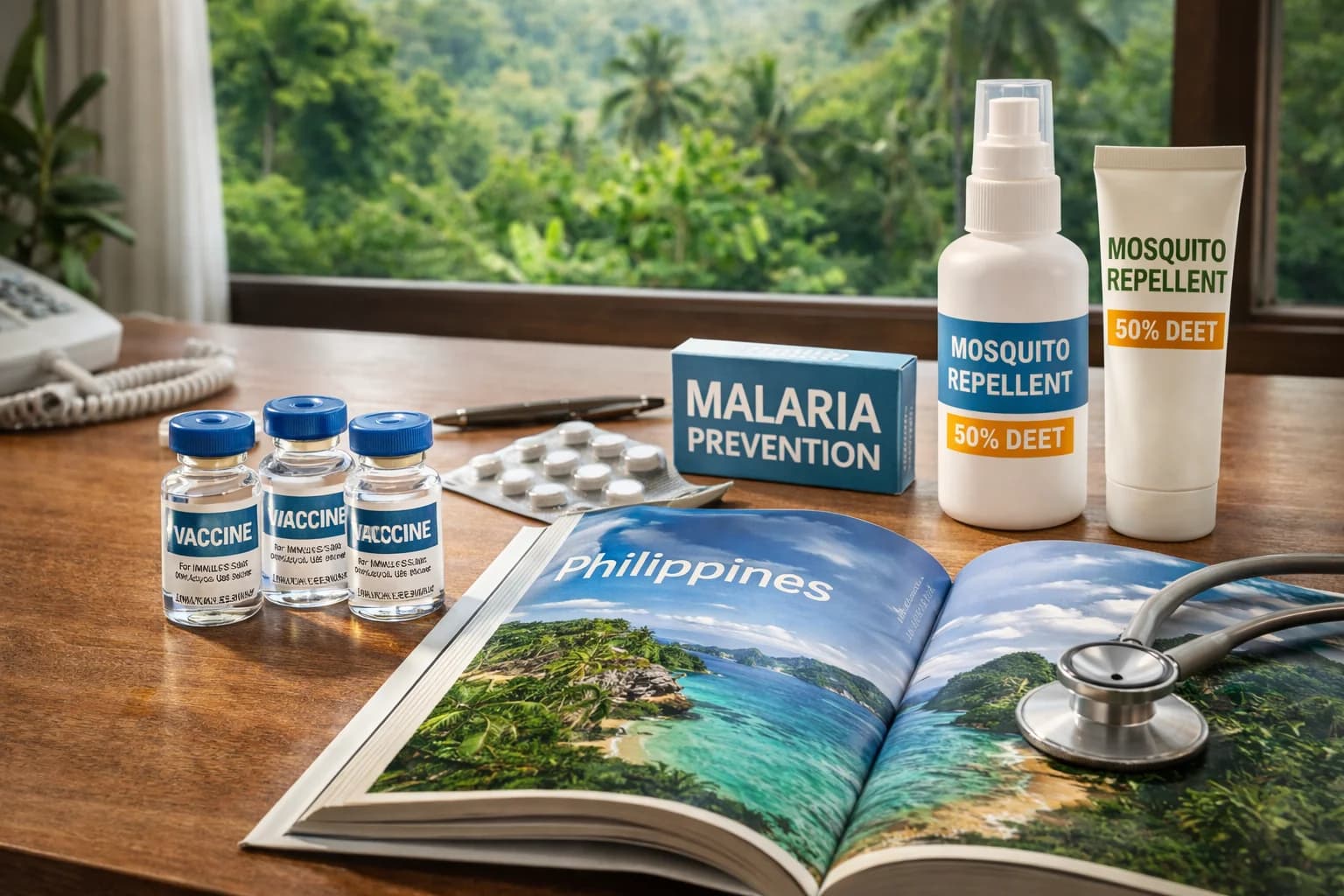
Health in the Philippines in 2026: Mosquitoes, Water, and Disease (Everything You Need to Know)
Before a first trip to Southeast Asia, forums are full of travelers anxious about malaria, tropical vaccines, and dengue fever. Forget the paranoia: traveling in the Philippines is generally very safe health-wise.
However, there are three golden rules (water, sun, and mosquitoes) that must absolutely be respected so as not to ruin your vacation with a "turista" or worse. Here is the factual and medical summary of the situation in 2026, validated by 25 years of expatriate experience.
---
1. Vaccines: Do You Need Shots Before You Leave?
There is a fundamental difference between "mandatory" and "recommended" vaccines:
Mandatory Vaccines (The Law)
Zero. There are no mandatory vaccines to enter Philippine territory in 2026 if you are coming directly from Europe, North America, or Oceania.
Exception: Yellow Fever is required only if you have transited through an endemic African or South American country right before arriving.
Highly Recommended Vaccines (Common Sense)
Hepatitis A: The virus is transmitted through contaminated water or food. This is THE essential vaccine (often combined with Hepatitis B, via Twinrix*) for any traveler in Asia.
Typhoid: Recommended if you plan to eat street food* or go on long treks in the rice terrace villages of Banaue.
* Tetanus/Diphtheria/Polio (DTP): Just make sure your classic boosters are up to date. On a scooter, an earth-infected wound happens quickly.
Rabies: The Philippines is home to a lot of stray dogs (Askals*) and monkeys (in Palawan). The preventive vaccine (3 injections) is useful for long-term backpackers. If you are bitten, vaccinated or not, you will have to rush to a hospital within 24 hours.
---
2. The Real Enemy: Dengue and Malaria
Many tropical medicine centers in Western countries force the issue to prescribe the miracle pill against malaria (Malarone). Think twice about it.
🚫 The Malaria Myth
The Philippines has been declared "Malaria-Free" on 95% of its territory since 2026. Malarone is expensive, makes you sick (nausea, intense dreams), and is totally useless if you are going to Cebu, Bohol, Siargao, or Boracay.
* The only exception: Palawan. If you are trekking in the remote rural areas in the south and extreme west of Palawan (Balabac, Rizal), consult your doctor. For ultra-touristy areas (El Nido, Coron), the risk is virtually zero today.
🦟 The Hell of Dengue
This is the real threat. Dengue is transmitted by "city" mosquitoes (Aedes) that bite... during the day.
There is no 100% validated preventive treatment (the dengue vaccine is controversial and recent).
The rule is strict: prevention means repellent.
* The Local Trick: Don't buy overpriced "organic" mosquito sprays in Western pharmacies! They will be ineffective here.
* Buy OFF! Overtime locally: This is the local brand sold in every supermarket (about $3/€3 a tube). It is a 25% DEET-based lotion, which applies like sun milk, and which truly works on local tiger mosquitoes. Put some on your ankles first thing in the morning.
---
3. Water and Food: The "Turista" Friend
Tourist stomach ache is not a myth, but it is easy to avoid.
* NEVER DRINK TAP WATER. Tap water is unfit for consumption throughout the Philippine territory (even for locals).
Ice Cubes and Purified Water: Ice cubes in restaurants are made from a Purified Water Station. You can order your Banana Shake* or Coke with ice without fear! Just avoid the unrefrigerated street vendors on the beach.
* Brushing teeth: In Manila or Cebu City, you can brush your teeth with tap water. But on the small islands (Siargao, Boracay), prefer mineral water, because the piping system often suffers from brackish infiltrations.
---
4. Local Medical Care: Hospitals and First Aid Kit
The Philippine healthcare system is modeled on the American system: no insurance, no care.
If you get injured, head exclusively to one of these world-class private hospital chains, worthy of the best clinics in the world:
* St. Luke's Medical Center (Manila / BGC).
* Chong Hua Hospital (Cebu).
* Makati Medical Center (Manila).
Outside the big cities, the small regional "Medical Centers" manage sprains, jellyfish stings, and scooter injuries very well, but are very poorly equipped for complex emergencies.
The Essential First Aid Kit:
1. Imodium / Pepto-Bismol: Classic against intestinal disorders linked to local food (spicy sauce and fat).
2. Local Antiseptic (Betadine) & Waterproof Bandages: The slightest cut on a coral or rock gets infected 100% of the time due to the humid tropical climate. Wash with fresh water immediately.
3. Paracetamol (Tylenol/Panadol): Easy to find locally under the brand name Biogesic.
4. SPF 50+ Mineral Cream: Unfindable in the Philippines in European pharmacy quality (they mostly sell skin whitening creams and chemical screens that destroy corals).
5. Corticosteroid cream (Hydrocortisone): For violent bites from sand insects (Sandflies/Nikniks) very present on unmaintained beaches in Palawan.
One of our colleagues actually had to hastily modify his roadbook budget after a minor mishap on a coral. Don't forget to take out travel insurance before you take off!
Plan and book
Useful services to complete your Philippines trip
Always compare the final price and conditions before booking. These are the steps that most often delay a departure.
Compare flights
Search routes and fares to Manila, Cebu or Clark.
Search flights →Book accommodation
Choose a flexible option and keep proof of your arrival address.
View accommodation →Book activities
Compare tours, visits and experiences in Manila, Cebu and Palawan.
Browse activities →Arrange a transfer
Pre-book a ride between the airport and your accommodation.
Compare transfers →Compare a complete trip
An alternative for comparing flights, hotels and transport in one place.
Open Trip.com →Check travel insurance
Review medical coverage and exclusions before departure.
Get a quote →Install an eSIM
Prepare your mobile connection before landing in the Philippines.
View data plans →Prepare your payments
Compare exchange rates and fees before payments or transfers.
Explore Wise →Prepare onward proof
Verifiable reservation solution when your return itinerary is not fixed.
View solution →